Improvisation is key

Sometimes you have to make do with what you’ve got. Normally, if I have a sheep that for any reason needs to be brought from the pasture to the yard, I will catch said sheep, put her in my “ewe haul”, which i pull behind the side by side, and bring her in. 

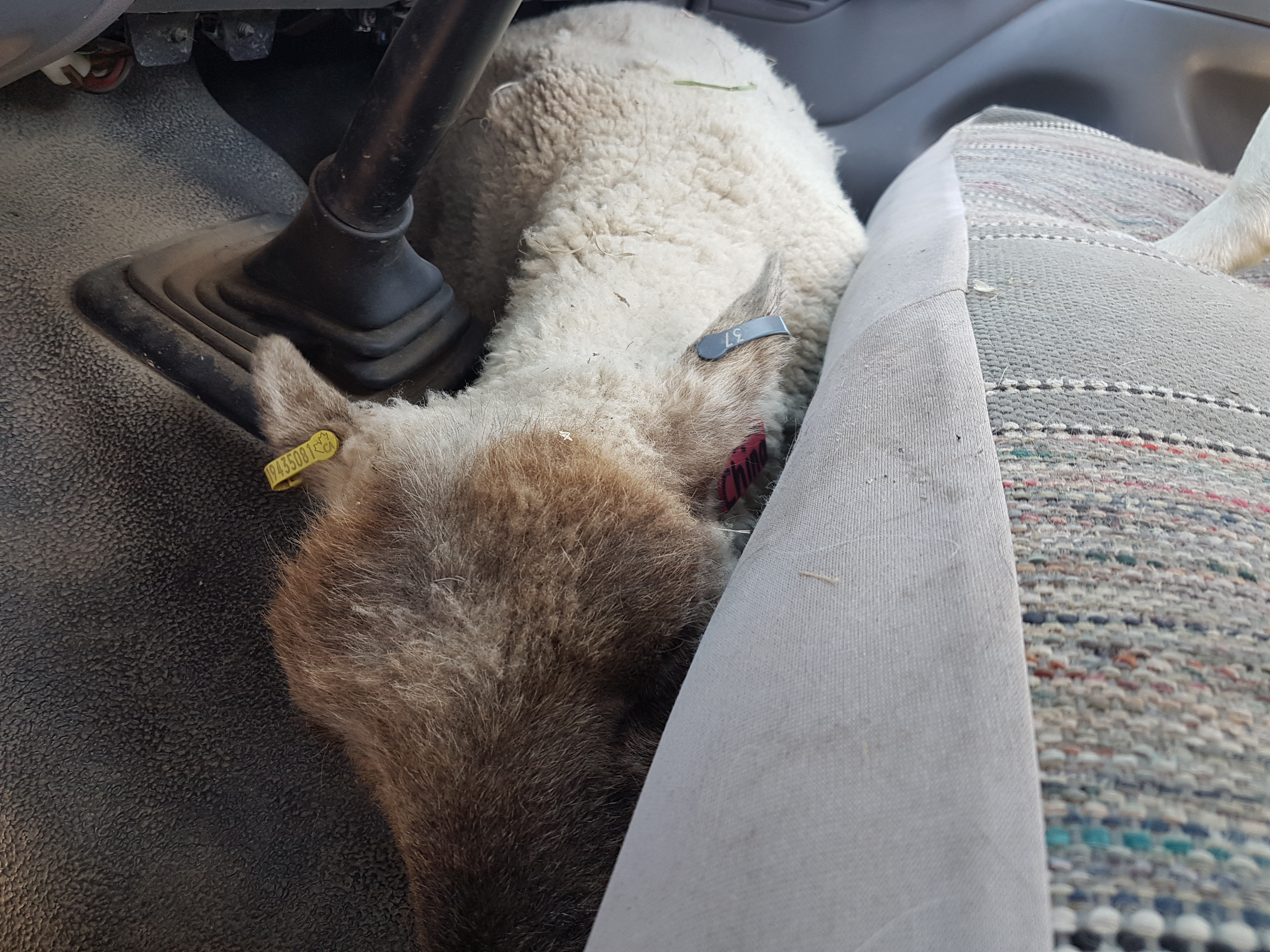
But, both my side by side and the ewe haul are in need of repairs, so I am using the old truck (or the old quad). So when I had a ewe that needed to be brought in because she was sick, I had to improvise. First I thought I would put her in the back of the truck, but soon decided I couldn’t get her up there on my own, so into the front she came. It was a short and uneventful ride back and she was soon settled in the yard, neither her or the truck any worse for wear.

Learning as you go

It seems with sheep there’s always something to learn. This year we are lambing later than the previous years to accommodate our expanded cattle herd. I debated greatly about where to set up my lambing field this year. I like to have the ewes close to the yard, as it is easier to check on them, catch them if I need to, and there is some shelter from the elements. On the other hand, using our calving pastures means the grass that is trying to grow there gets continually nibbled on, there is little stubble for shelter for the lambs, and the ground is some what contaminated. 

Water is another considersation. Using the drift lambing method, I need access to water in at least 4 places. Because spring stalled out mid April, our shallow pipeline was still frozen so couldn’t be used. 

So in the end, I returned to the same field, near the yard. I am hoping to be able to move ewes with their lambs out to another pasture as soon as the water flows. 

In the mean time however, the sheep escaped from the pasture we were feeding them in (I guess they decided a broken down cattle fence wasn’t much of a barrier after all) and discovered the fresh grass on the other side. Knowing that they wouldn’t stay back in their pasture, and still being a few days from lambing, I moved them into a nearby pasture with enough grass to keep them content. The first lambs were born in this field, and in some ways, it made an excellent place. There was a lot of old stubble to give the lambs some shelter from the wind, there is a slough that runs the length of the pasture, so water is available in many places, and it is close to the yard. 

The main drawback was that it does not have a sheep proof fence. It is a 3 or 4 wire barb fence, and a couple of the ewes soon discovered they could slip out underneath and find some fresh alfalfa. If they had stayed there for a few weeks, it’s likely more and more would slip out. Another problem with this pasture is that it is a pretty regular area for coyotes. In the short time the lambs were there, I chased off a coyote that was eyeing up a young set of twins. 
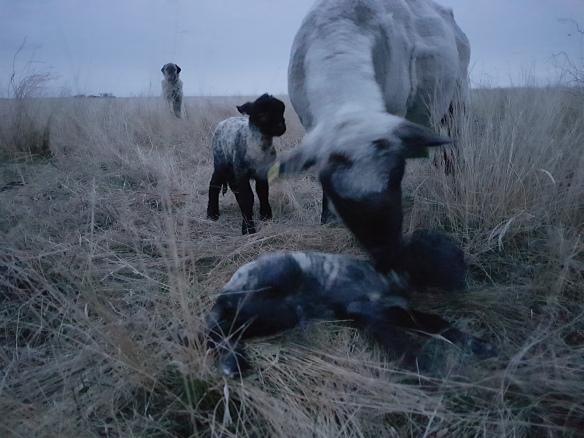
Thor watching over the first set of twins

But, despite not using this pasture, it has given me something to think about for next year.

It’s 10 o’clock. Do you know where your lambs are?

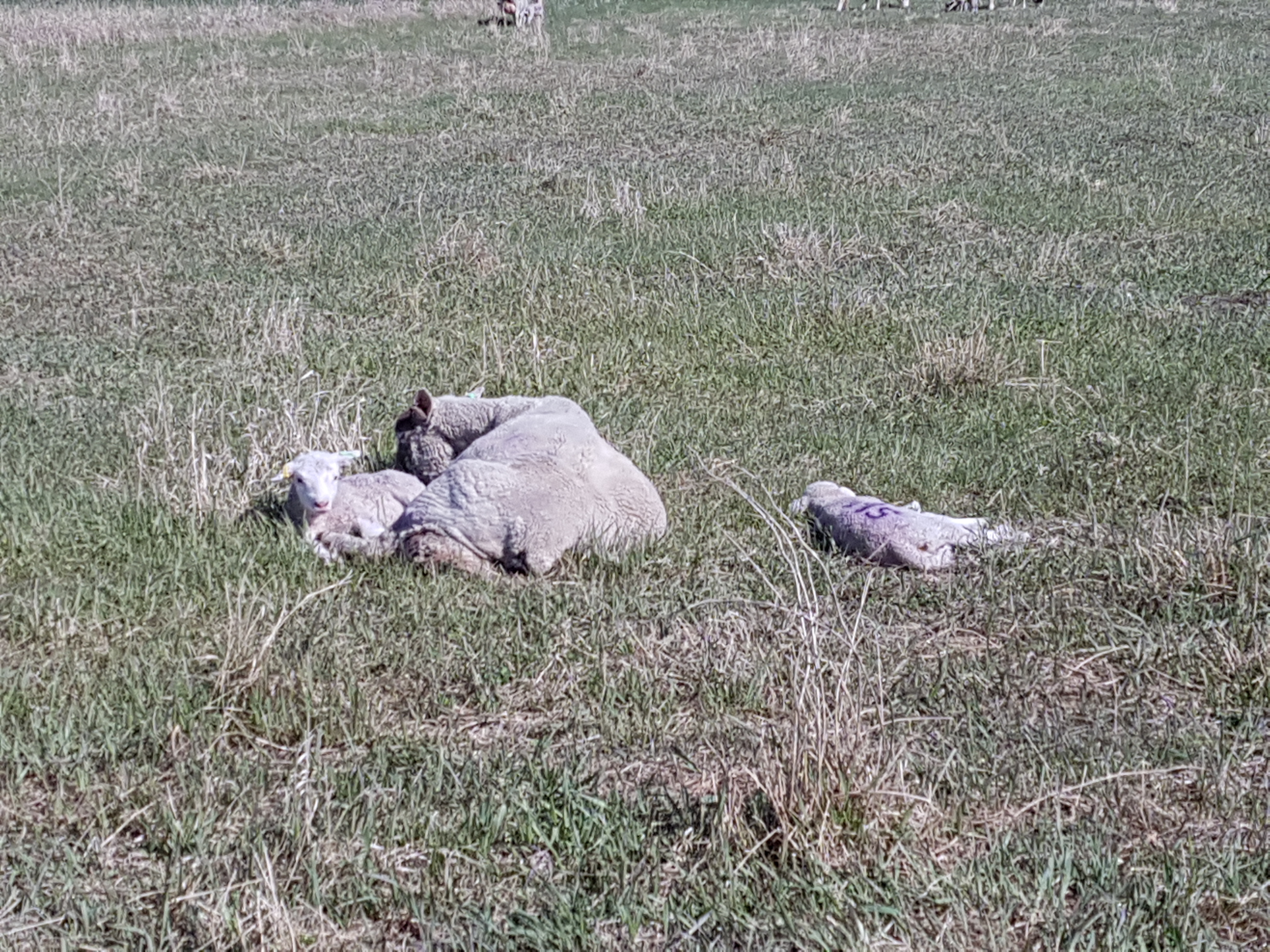
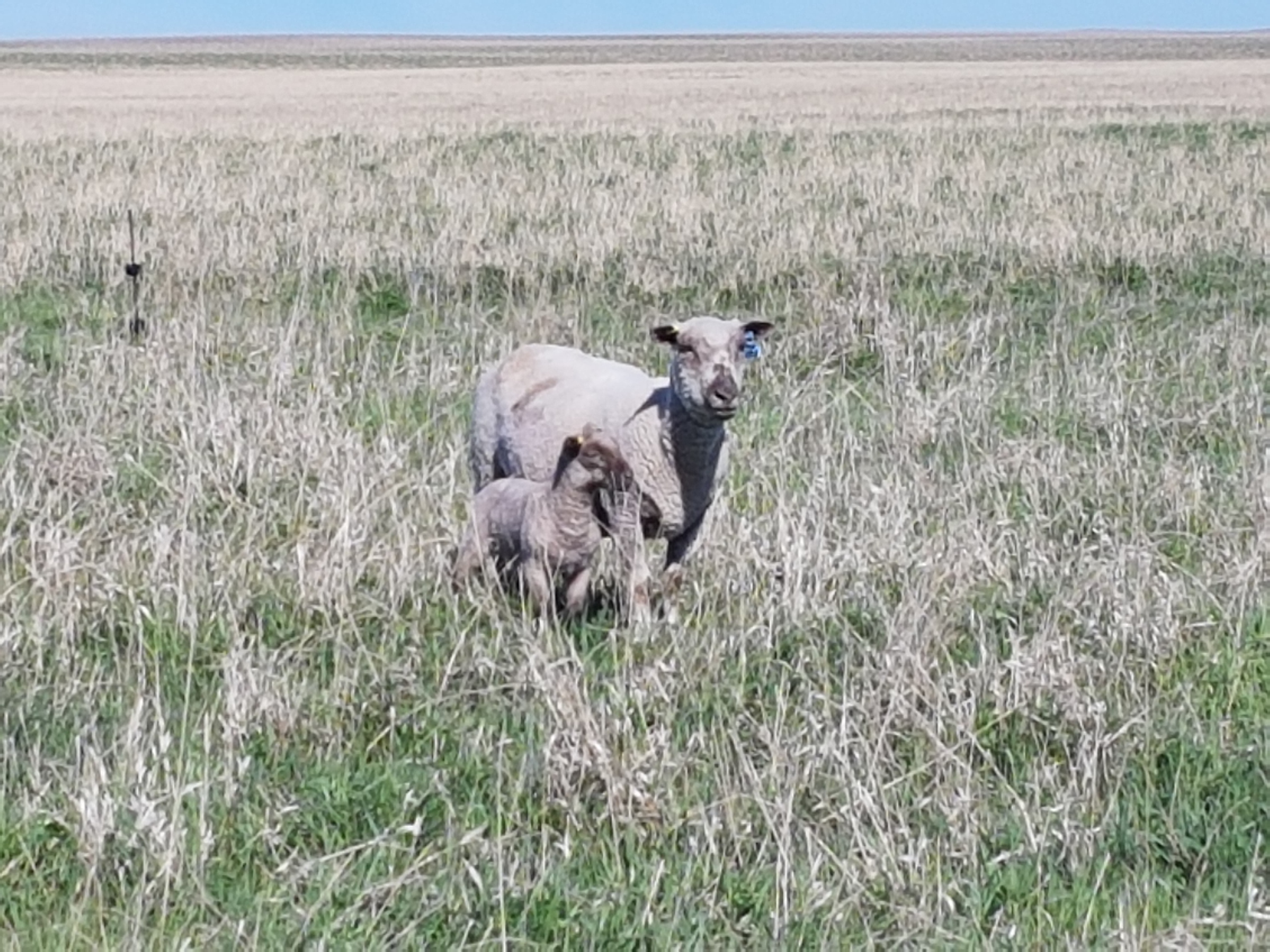
Most of the lambs have arrived. As usual it was a busy 3 weeks, with about 600 lambs arriving in that time span. It went well, the lambs are a good size and strong, the weather has been good, and the ewes are getting more self sufficient every year. The majority are out in a larger pasture so it is important that each ewe knows how many lambs she has and where they are. When the lambs are young, the stick pretty close to their mom, but as they age, they get bolder and more independent and stray further away. When I walk through the flock each morning, one of the things I am looking for is missing or hungry lambs. Usually the best indicator that a lamb has gone missing (we have had a couple coyotes hanging around grabbing the odd take-our meal) is a ewe that is looking for it. In the mid morning, after the ewes have grazed, they usually bed down with their lambs nearby for a rest. 

 When I see this, I can be pretty assured that there are no issues here. If a ewe is looking for her lamb, I check my book, note the lambs number, and keep watch for it. If a lamb is looking for a ewe and looks hungry and lost, I do the same. At this point I am relying heavily on the sheep to let me know if something is wrong. The lambs size right now means that they can be carried off by a coyote with little to no evidence left behind, or the lambs can even just lay down in the grass and be difficult to find. But as long as their mom is on the job, they should be fine.

Time flies…

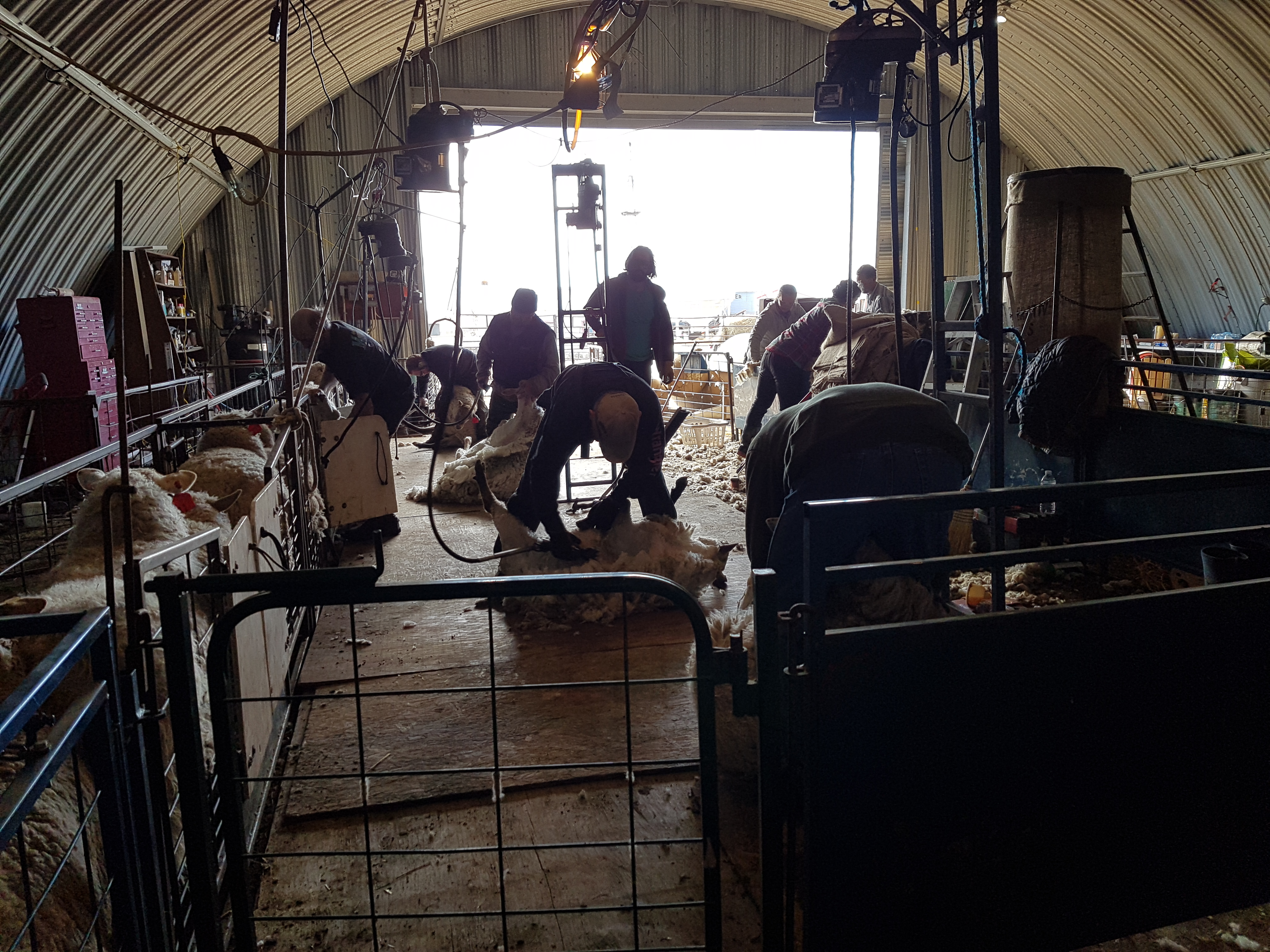
Spring is well under way here. Calving is roughly half done, and the lambs should start arriving in the next week or so. Spring is always a busy time on the farm, it seems to arrive all of a sudden, bringing with it many jobs that can’t be done in the winter. There are also the usual spring jobs, like shearing, vaccinating, fence checking, feeding and moving animals, and preparing for the birthing season. 

This spring, I spent a few days helping at other sheep producers shearing days. It is a day which requires a lot of help, and I always enjoying seeing other people’s set up, and sheep. 

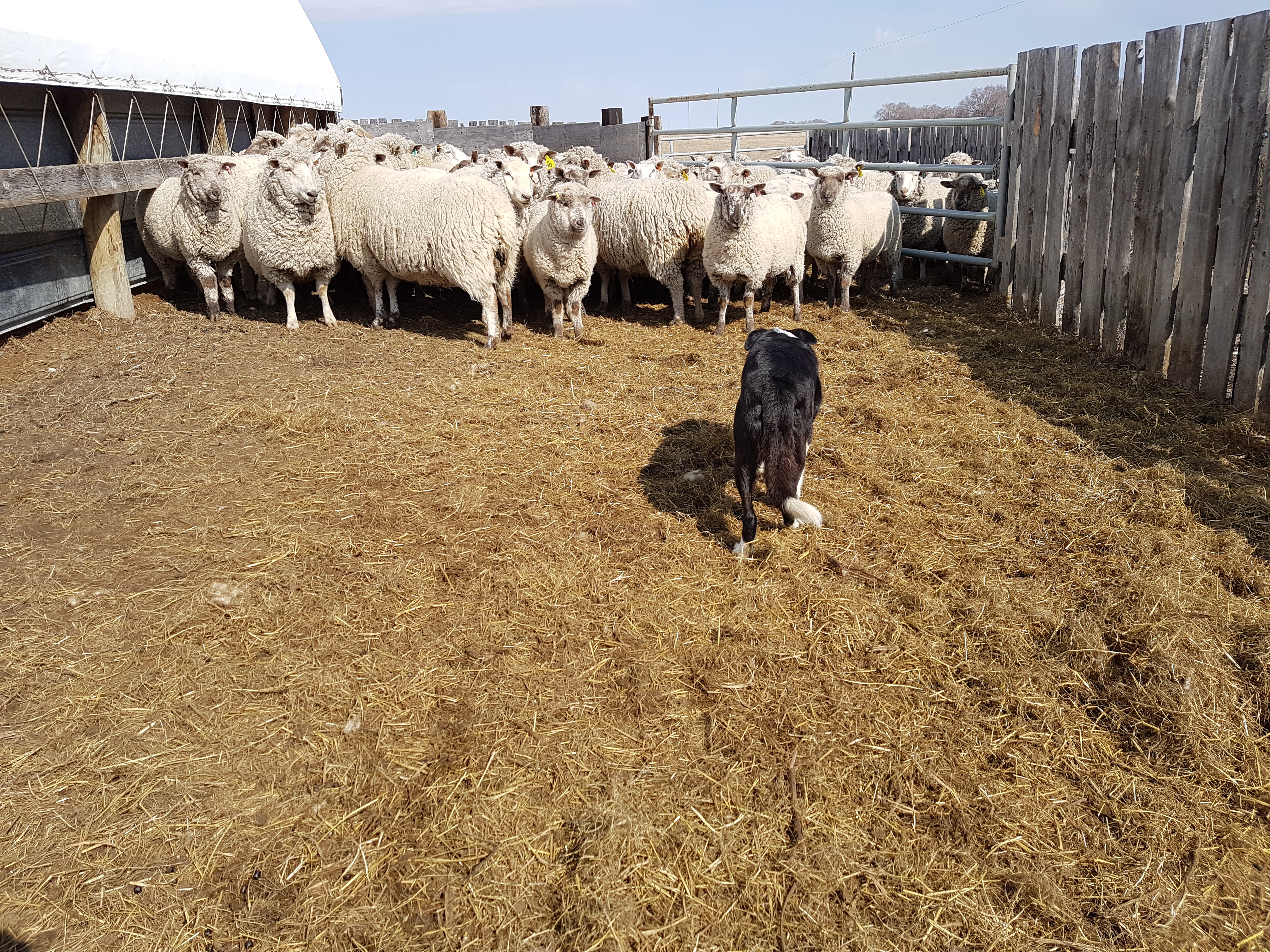
I also took Jack the dog along to a couple places to help, which he thoroughly enjoyed. It’s great practice for both of us to work in new situations and places. 

Now that lambing is almost here, it seems like winter was long ago and time has flown. I guess because I am having fun.

Attitude is everything 

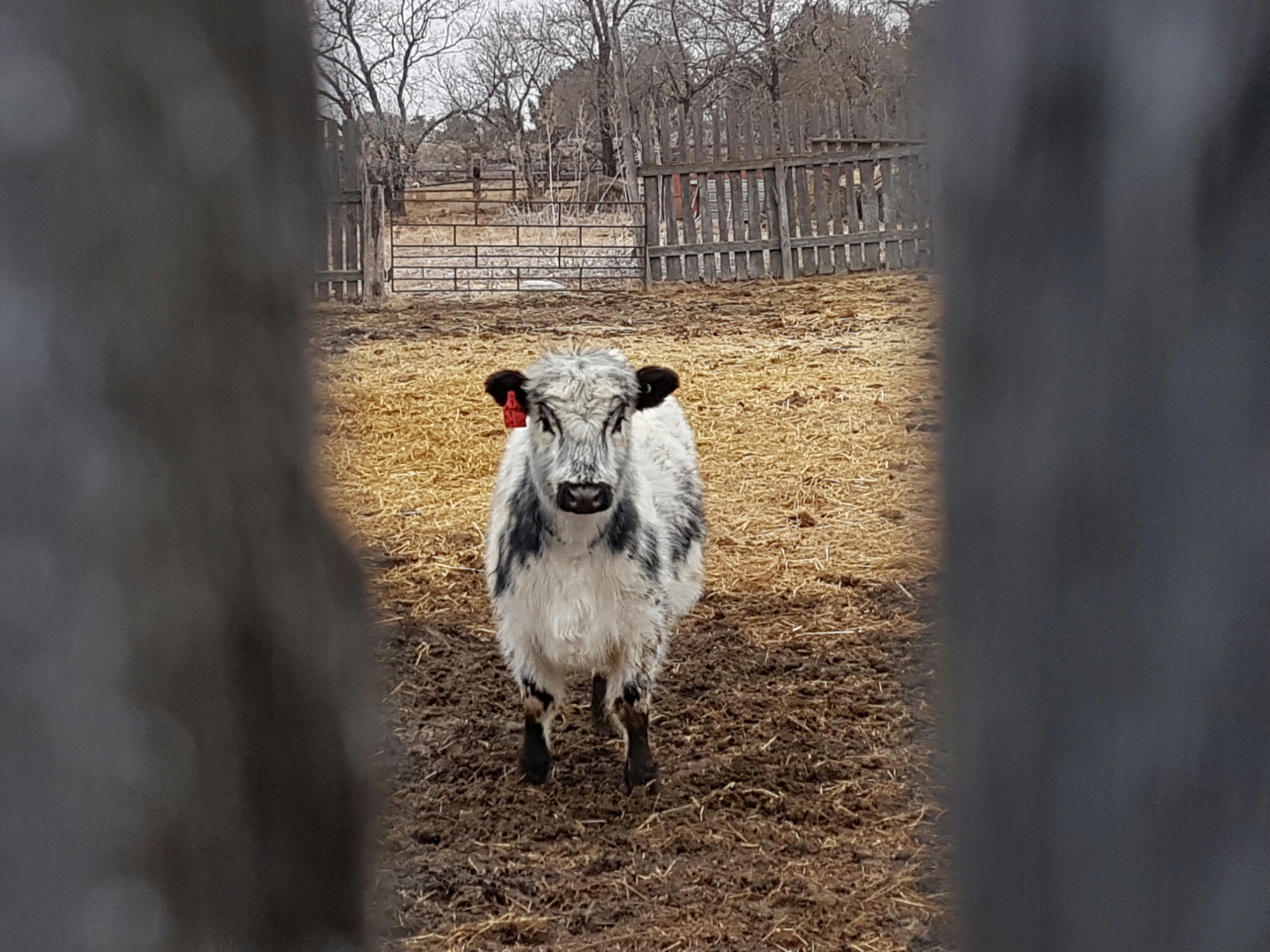
This is Delia. I have admired her since she was a calf last spring. She is a very nice looking heifer that I was looking forward to adding to our breeding herd. Unfortunately, Delia has a terrible temperament. She is, for some unknown reason, wild and unpredictable. As soon as you are within her sight, her head is up and her feet are moving. A cow like that can be dangerous and makes the animals around them nervous and spooky as well. 

I first noticed it this summer when she was a calf, but hoped that when she was being fed every day she would settle down. Sadly, this is not the case and she hasn’t improved. I debated, and went back and forth on whether to keep her as a replacement heifers or not, as she is one of the nicest, if not THE nicest heifer of the bunch. But ultimately, I decided the risk is just not worth it. Sure, there is a possibility she will settle down and be a good cow, but there’s also a possibility she will continue to be wild and a danger to everyone on the farm. So Delia will be getting on the truck with the steers next week and heading to a feedlot, where she will be fattened and turned into beef. Because sometimes, attitude IS everything.